



Covert CDJR Bee Cave
Engines and Performance
Two engines: the 293-horsepower 3.6L Pentastar V6, and the new 324-horsepower 2.0L Hurricane 4 Turbo. Both run on regular 87 octane, both use an eight-speed automatic, and both tow 6,200 lbs. The structural fact most buyers get wrong: the trim decides which one you get.
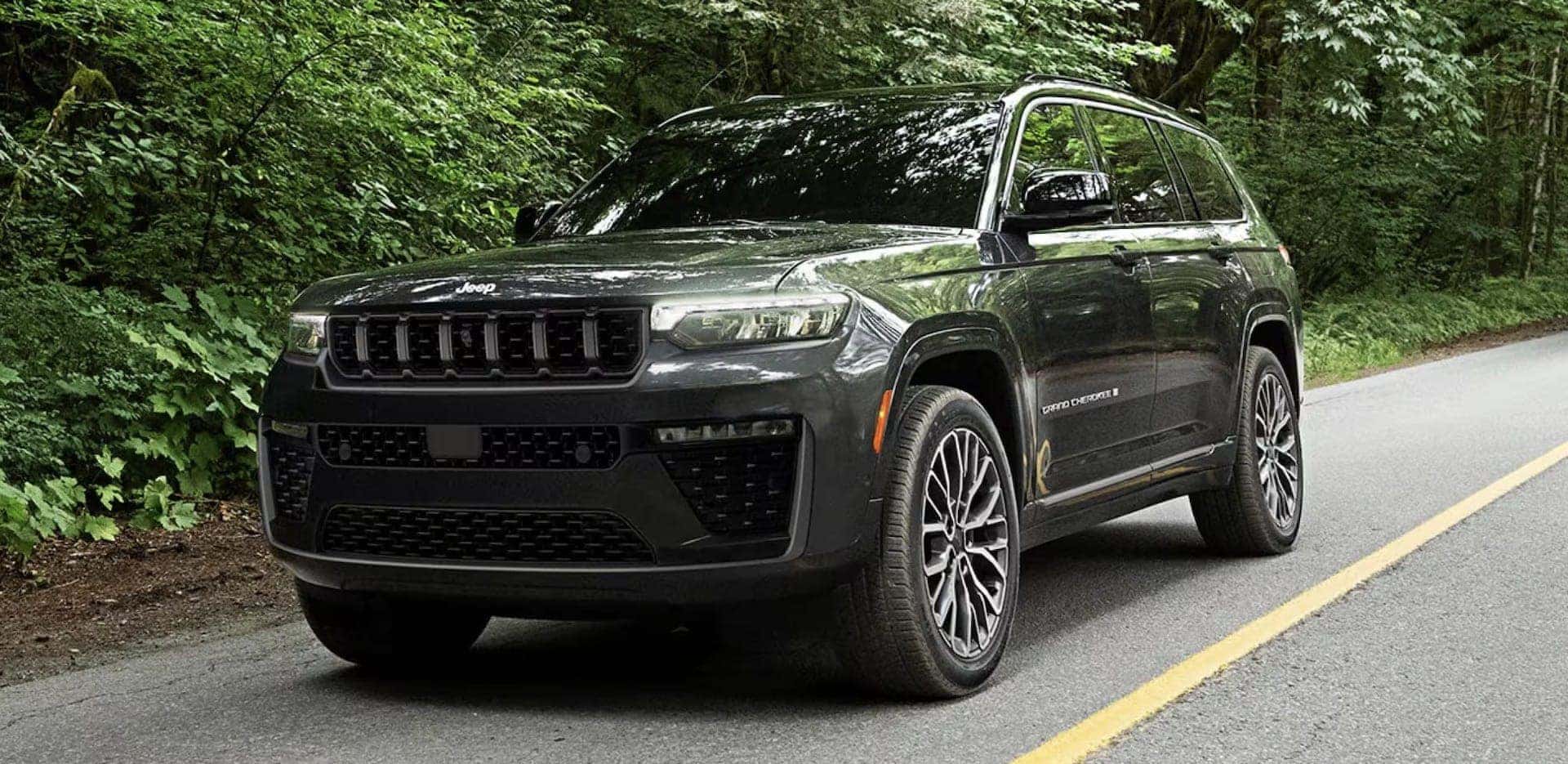
Sustained triple-digit heat is the condition a turbocharged engine is actually judged on here, which is why the octane the engine requires, and the octane it merely prefers when the trailer is hooked up, is worth knowing before the first summer tow. The short answer on both 2026 Grand Cherokee engines: 87 regular is all either one requires.
This page is the powertrain home for the whole Grand Cherokee family, two-row and Grand Cherokee L alike. It covers both engines in full, the transmission and drivetrains, the complete EPA table by configuration, and which engine suits which buyer. Trim equipment lives on the trims compared page.
| Engine | Output | Where it is offered |
|---|---|---|
| 3.6L Pentastar V6 | 293 hp / 260 lb-ft | Standard on Laredo and Laredo X |
| 2.0L Hurricane 4 Turbo | 324 hp / 332 lb-ft | Standard on Laredo Altitude, Limited, 85th Anniversary Edition, Limited Reserve, Summit |
The spread is 31 horsepower and 72 lb-ft, and the torque figure is the one you feel. Both engines are offered identically on the two-row Grand Cherokee and the Grand Cherokee L.
293 horsepower at 6,400 rpm, 260 lb-ft at 4,000 rpm, on regular 87 octane through an eight-speed automatic. This engine is not new, and that is a feature rather than a caveat: Jeep has been putting the Pentastar in the Grand Cherokee since 2011, which is fifteen model years of running changes and known quantities. It is smooth, it makes its power high in the rev range, and it pulls the same 6,200 lbs the turbo does. Who it suits: the buyer who wants a naturally aspirated engine with a long track record and the lowest entry price in the lineup.
324 horsepower at 6,000 rpm and 332 lb-ft, held flat from 3,000 to 4,500 rpm, with 90 percent of peak torque available from 2,600 all the way to 5,600 rpm. That flat torque plateau is the whole point of this engine: it does its work low and wide, exactly where you drive, rather than making you chase revs. It is new to the Grand Cherokee for 2026 and pairs with a new Gen IV eight-speed automatic.
The engineering is more interesting than the displacement suggests. The Hurricane 4 uses Turbulent Jet Ignition, a pre-chamber above each cylinder that lights a small charge and jets flame into the main chamber for a faster, more complete burn. It is the industry’s first high-volume application of the technology. Boost comes from a variable-geometry turbocharger with active vanes running up to 35 psi, which is what gets the torque going at low rpm instead of waiting for the engine to spool. Jeep quotes 162 horsepower per litre. Who it suits: nearly everyone. It is stronger and more efficient than the V6 it replaces on the upper trims, and in stop-and-go traffic on TX-71 the low-end torque is the difference you notice on day one.
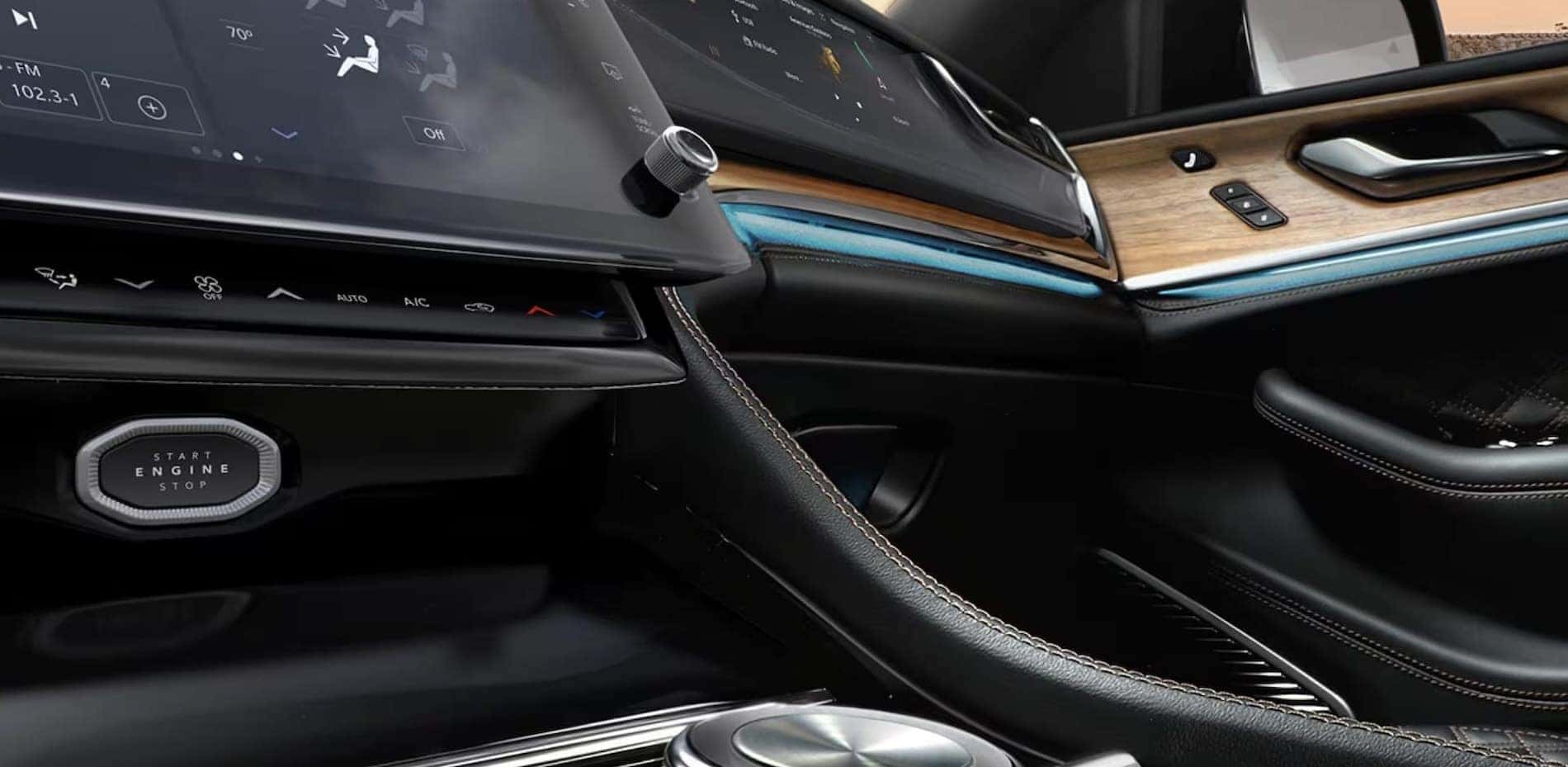
Both engines use an eight-speed automatic; the Hurricane trims get the newer Gen IV version. Drivetrain availability is tied to trim, not to engine:
| Trims | Drivetrain |
|---|---|
| Laredo, Laredo X, Laredo Altitude, Limited | Rear-wheel drive standard; four-wheel drive a $2,000 option |
| Limited Reserve, Summit | Four-wheel drive standard |
| 85th Anniversary Edition | Four-wheel drive only |
On the four-wheel-drive side, Quadra-Trac I is the base system and Quadra-Drive II is available with a rear electronic limited-slip differential. Selec-Terrain gives five modes: Auto, Sport, Rock, Snow and Mud/Sand. Quadra-Lift air suspension is available and is standard on the Summit, raising the body for clearance and lowering it at highway speed. The Summit also brings a two-speed transfer case with low range, which is genuinely useful when the Balcones Escarpment turns a crossing into a climb.
| Spec | 3.6L Pentastar V6 | 2.0L Hurricane 4 Turbo |
|---|---|---|
| Horsepower | 293 hp at 6,400 rpm | 324 hp at 6,000 rpm |
| Torque | 260 lb-ft at 4,000 rpm | 332 lb-ft, 3,000 to 4,500 rpm |
| Transmission | 8-speed automatic | 8-speed automatic, Gen IV |
| Fuel | Regular 87 octane | Regular 87 octane; 91+ recommended, not required |
| Max towing | 6,200 lbs | 6,200 lbs |
| Fuel tank | 23.0 gal | 23.0 gal |
| Where offered | Laredo, Laredo X | Altitude and up |
Both figures are with a conventional hitch, properly equipped. The engine is not the tow variable on this vehicle.
Fuel economy is per configuration, never one number for a model. All eight EPA-certified 2026 Grand Cherokee configurations, city / highway / combined:
| Body | Engine | Drive | EPA MPG |
|---|---|---|---|
| Grand Cherokee | 3.6L V6 | RWD | 19 / 26 / 22 |
| Grand Cherokee | 3.6L V6 | 4WD | 19 / 26 / 22 |
| Grand Cherokee | 2.0L Turbo | RWD | 21 / 27 / 23 |
| Grand Cherokee | 2.0L Turbo | 4WD | 20 / 25 / 22 |
| Grand Cherokee L | 3.6L V6 | RWD | 19 / 26 / 21 |
| Grand Cherokee L | 3.6L V6 | 4WD | 18 / 25 / 21 |
| Grand Cherokee L | 2.0L Turbo | RWD | 21 / 26 / 23 |
| Grand Cherokee L | 2.0L Turbo | 4WD | 20 / 25 / 22 |
Ratings are published at fueleconomy.gov. Two things stand out. The turbo beats the V6 on fuel economy while making more power, which is the whole argument for the Hurricane. And on the two-row V6 the rear-wheel-drive and four-wheel-drive ratings are identical for 2026, so four-wheel drive on a Laredo costs you nothing at the pump.
| If you mostly… | Take |
|---|---|
| Want the lowest entry price and a long-proven engine | V6, Laredo or Laredo X, shop V6 builds |
| Sit in stop-and-go traffic every weekday | Turbo, from the Altitude up, browse turbo builds |
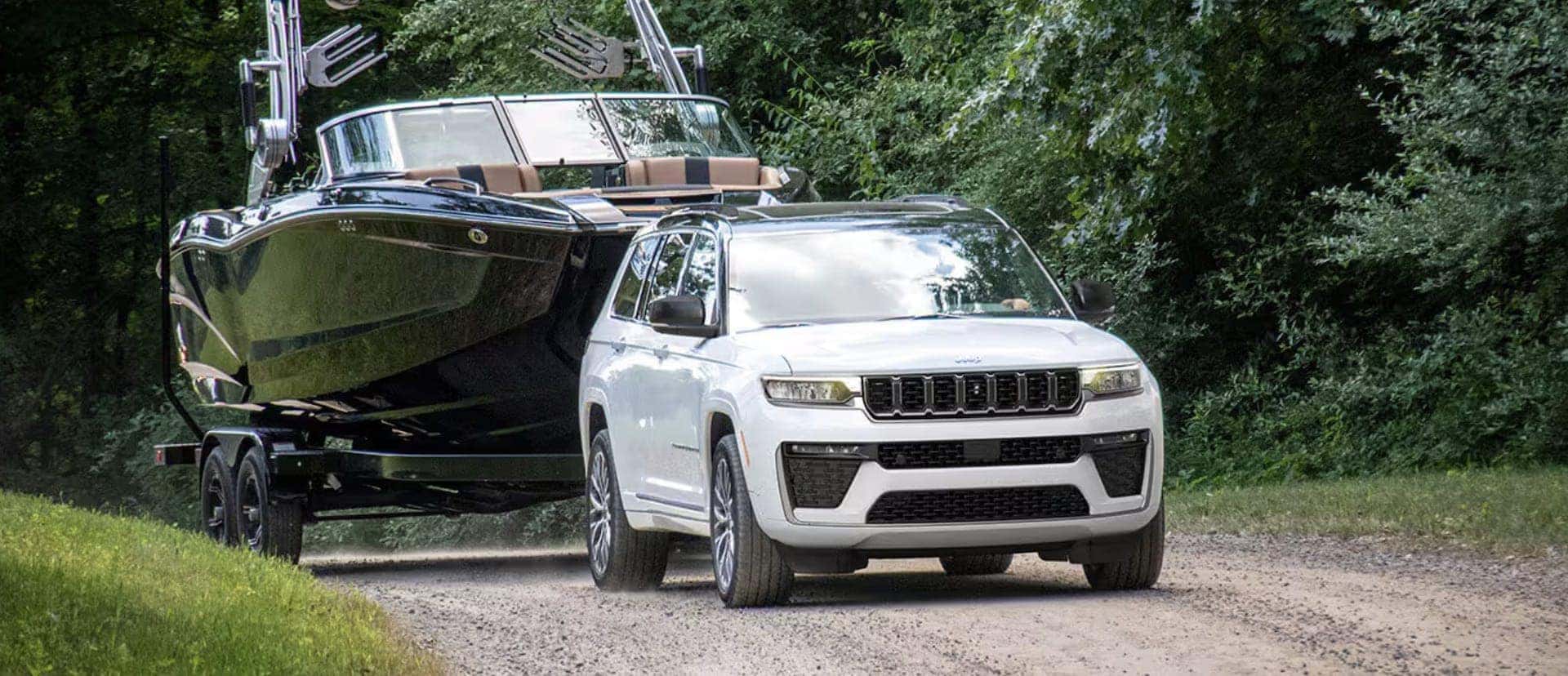
| Tow a boat out to the Highland Lakes on weekends | Either; both rate 6,200 lbs. The turbo’s low-end torque makes the ramp easier |
| Care most about fuel economy | Turbo, rear-wheel drive, at 21 / 27 / 23 |
| Cross unpaved roads and low-water crossings | Either engine with 4WD; Summit for low range and air suspension |
The difference between these two engines is a ten-minute drive, not a spec sheet. We stock both at 16501 Sweetwater Vlg Dr Building 3, and we are a straight run west on US-290 from Dripping Springs or down US-281 from Marble Falls and Burnet. Drive a Laredo and a Limited back to back on RM 2244 and the torque difference explains itself. Call (512) 900-6192 or schedule a test drive online.
Two: the 3.6L Pentastar V6 at 293 horsepower and 260 lb-ft, standard on the Laredo and Laredo X, and the 2.0L Hurricane 4 Turbo at 324 horsepower and 332 lb-ft, standard from the Laredo Altitude up through the Summit.
It makes 31 more horsepower and 72 more lb-ft, and it returns better EPA figures: 21 / 27 / 23 in rear-wheel drive against the V6’s 19 / 26 / 22. Both tow 6,200 lbs and both run on regular fuel. The V6 has been in this vehicle since 2011 and is the more familiar quantity.
No. The Hurricane 4 Turbo runs on regular 87 octane. Jeep recommends 91 or higher for optimal turbo performance in hot weather or while towing, but it is a recommendation, not a requirement.
Both carry the same 6,200-lb rating properly equipped with a conventional hitch, so neither is more capable on paper. The Hurricane turbo’s 332 lb-ft arrives lower and stays flat from 3,000 to 4,500 rpm, which is what you feel pulling a loaded trailer up a ramp; the V6 makes its 260 lb-ft higher at 4,000 rpm.
No. The current-generation Grand Cherokee has never offered a V8; the 6.4L 392 belonged to the previous generation’s Trackhawk. The 2026 lineup is the V6 and the Hurricane turbo.
It is the combustion system in the Hurricane 4 Turbo: a pre-chamber above each cylinder ignites a small fuel charge and jets flame into the main chamber, burning the mixture faster and more completely. It is the industry’s first high-volume application of the technology, and it is a large part of how a 2.0-litre engine makes 324 horsepower on regular fuel.
It depends on the configuration. The best is the two-row turbo in rear-wheel drive at 21 / 27 / 23. The V6 two-row rates 19 / 26 / 22 in either drivetrain. The Grand Cherokee L runs about one MPG behind the equivalent two-row, down to 18 / 25 / 21 for the V6 with four-wheel drive.
See the lineup in person at Covert CDJR Bee Cave, or start your numbers online.


